
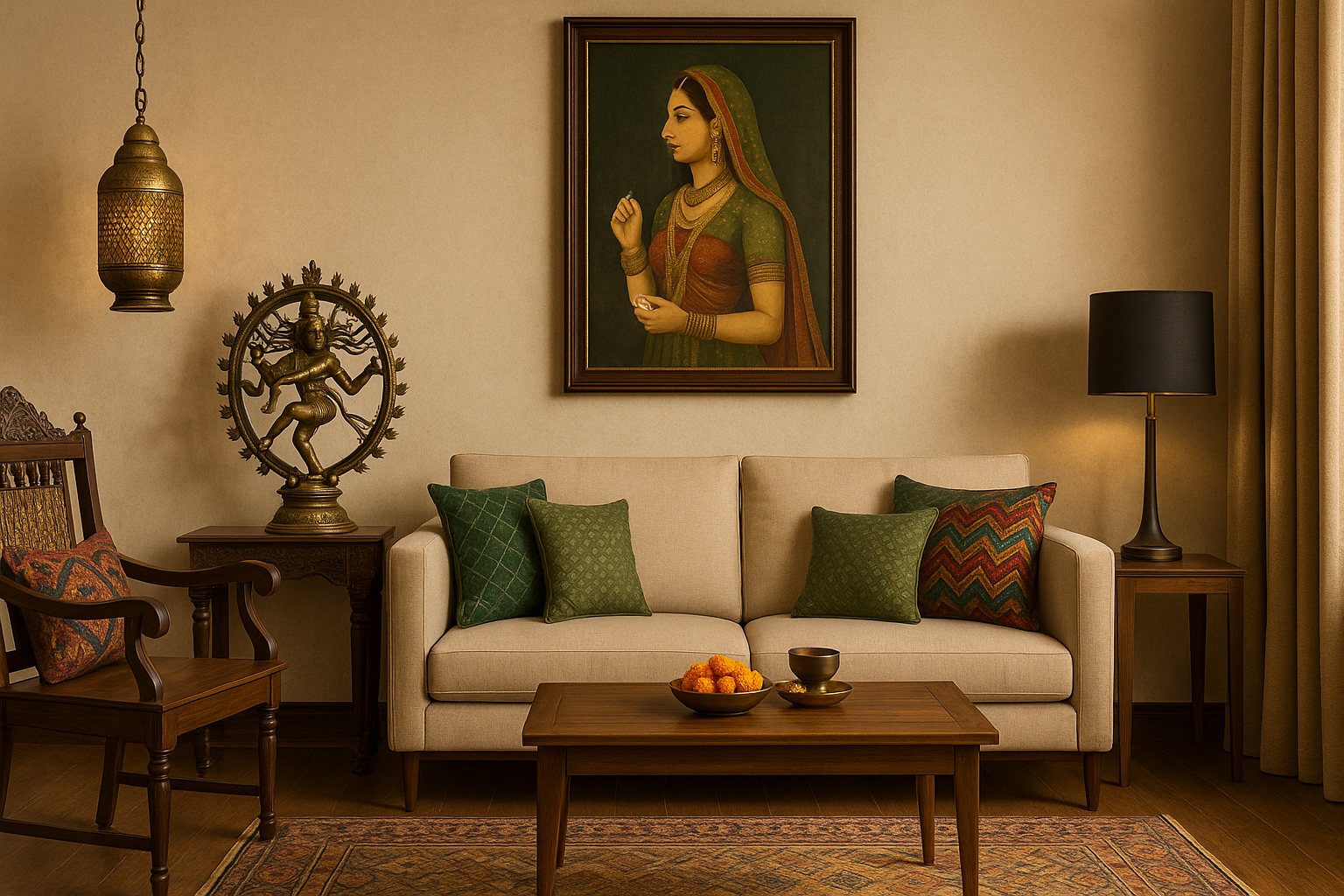
Designing a home is about storytelling. In India, where heritage and modernity coexist, blending traditional design elements with contemporary aesthetics creates interiors that feel timeless, personal, and sophisticated. The art lies in striking the right balance—so that neither tradition nor modern minimalism overshadows the other.
1. Celebrate Heritage with Statement Pieces
Introduce tradition through a few carefully chosen statement elements. A carved wooden swing, a brass pooja lamp, or handwoven dhurries can serve as cultural anchors. When styled against modern furniture and muted walls, these traditional accents shine without overwhelming the space.
2. Balance Materials and Finishes
Traditional Indian design thrives on rich woods, brass, and natural stone, while modern interiors favor glass, steel, and minimalist finishes. Combining these creates contrast and harmony. For example, pair a sleek marble dining table with wooden carved chairs, or use brass handles on contemporary cabinetry.
3. Blend Patterns with Simplicity
Traditional textiles—like ikat, block prints, or brocades—bring depth and character. Use them as cushion covers, runners, or accent curtains against clean-lined sofas and plain walls. The key is moderation: one bold traditional pattern balanced with a calm, neutral backdrop.
4. Play with Color Palettes
Modern interiors often feature neutral shades, while traditional Indian homes embrace vibrant hues. Combine both by using muted tones as the base—beige, grey, or ivory—and adding jewel tones like emerald, royal blue, or deep maroon in smaller details such as cushions, rugs, or wall art.
5. Lighting as a Bridging Element
Lighting can seamlessly connect tradition and modernity. Use sleek LED strips or cove lights for functionality, while adding traditional hanging lanterns, brass lamps, or chandeliers as highlights. This combination creates both elegance and warmth.
6. Create Visual Harmony
Balance is the golden rule. If one corner has a traditional carved sideboard, keep the surrounding walls clean and modern. If you have a minimalist sofa, pair it with handcrafted accessories. The dialogue between both styles should feel intentional and curated.
7. Personalize with Art and Accessories
Artworks, sculptures, and heirlooms are perfect ways to weave tradition into modern homes. A contemporary gallery wall can include framed vintage textiles or family portraits alongside abstract prints. Accessories like terracotta vases or brass bowls can elevate even the sleekest interiors.
The art of mixing traditional and modern interiors is about respecting the old while embracing the new. By blending heritage elements with contemporary design, you create spaces that are not just stylish, but also deeply personal and rooted in culture. The result is a home that feels both timeless and forward-looking—an authentic reflection of your story.